Oxhy

English

OXHY in Northern Italy: three regions, three formats, and a growing community

OXHY in Northern Italy: three regions, three formats, and a growing community

From Udine to Vicenza and Como, three very different events created new relationships, reached new audiences, and offered new ways to bring OXHY beyond its usual contexts.
Three days, three regions, and above all, three different experiences.

OXHY’s Northern Italy tour came to an end after stops in Udine, Thiene — in the province of Vicenza — and Como, leaving the team with much more than a simple series of events. Each stop offered a different way to bring OXHY into local communities and engage with different audiences, questions, and expectations.

One element connected all three events: the active role played by shareholders, associations, and people close to OXHY, who directly contributed to their creation and organisation.

For the team, the tour was also an opportunity to meet in person some of the enthusiastic investors who have supported the company since its early stages, turning relationships built remotely into direct conversations.
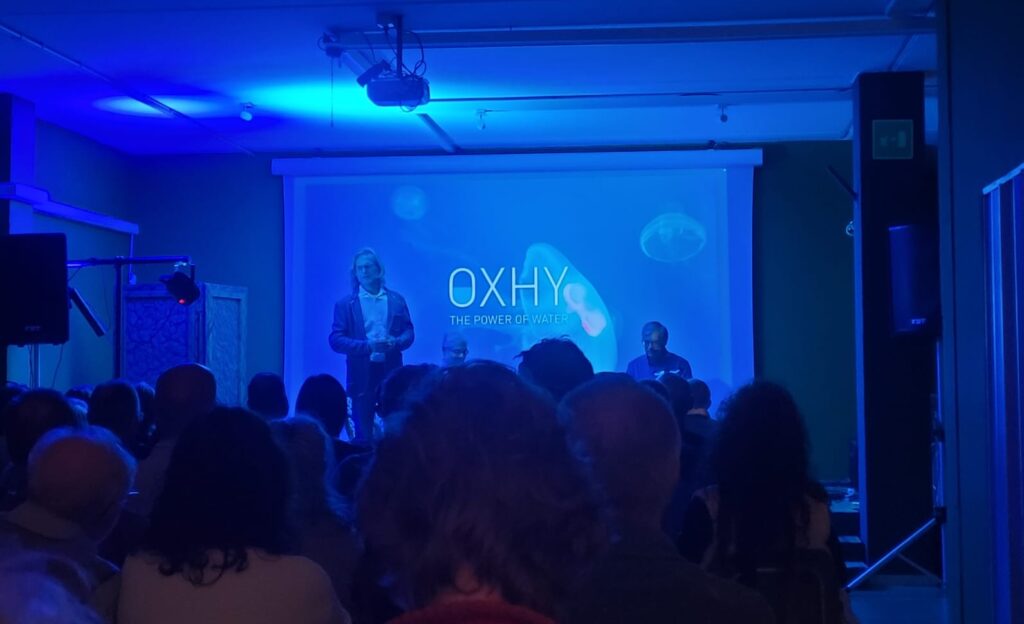
Udine: a community taking action

The first stop took place in Pradamano, in the province of Udine, together with Vivibensipo.

The event originated from the initiative of Aurelio Riccioli, an OXHY shareholder, with the contribution of Vivibensipo, its President Michele Pucci, Emiliana Peressini, and the association’s wider network.

The value of the event lay above all in its local dimension: bringing OXHY into a community outside the more traditional scientific, industrial, or financial settings, while creating space for questions and direct discussion.

It also showed how the relationship between OXHY and its shareholders can evolve beyond the investment itself, becoming a channel through which new networks, territories, and opportunities for dialogue can be activated.
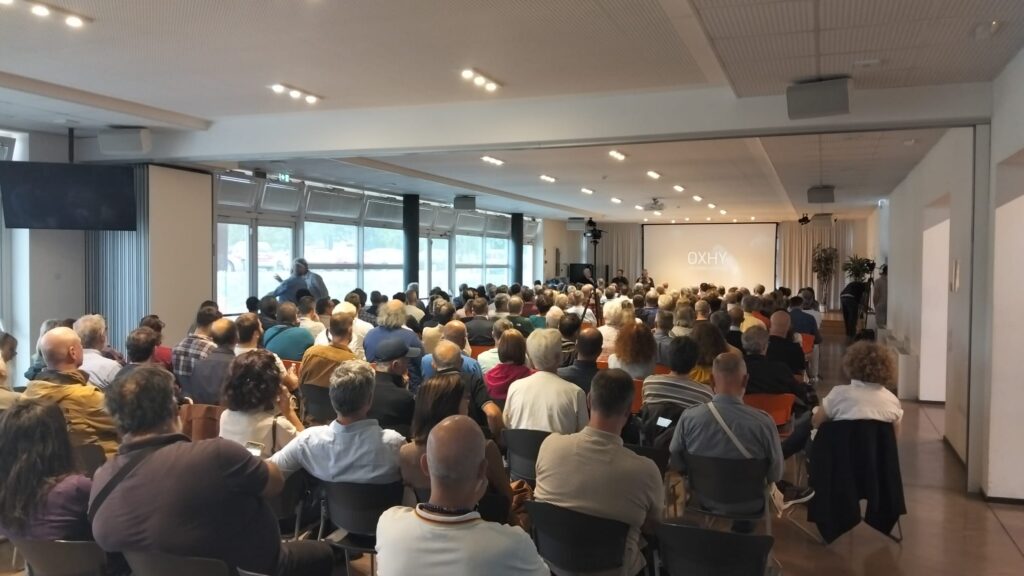
Vicenza: more than 200 people discussing energy and innovation

The second stop had a very different scale.

In Thiene, in the province of Vicenza, more than 200 people attended the event, making it the most highly attended stop of the tour.

The event was organised with the contribution of Salus Live Foundation and its President, Flavio Vezzaro, together with people who already know OXHY’s journey well, including Paola Zocca of APS VIemozioneRete, Enrico Dianin, Managing Director of Metexhy — the “vehicle” behind OXHY’s recent and exceptional crowdfunding campaign — and Fabio Castellucci.

The evening brought OXHY’s story to a broad and diverse audience, creating a direct discussion around research, technological development, and the prospects offered by new approaches to energy generation and recovery.

The many questions and conversations that emerged during and after the event highlighted how valuable these occasions can be not only for presenting the project, but also for building new relationships with people from different professional backgrounds and territories.
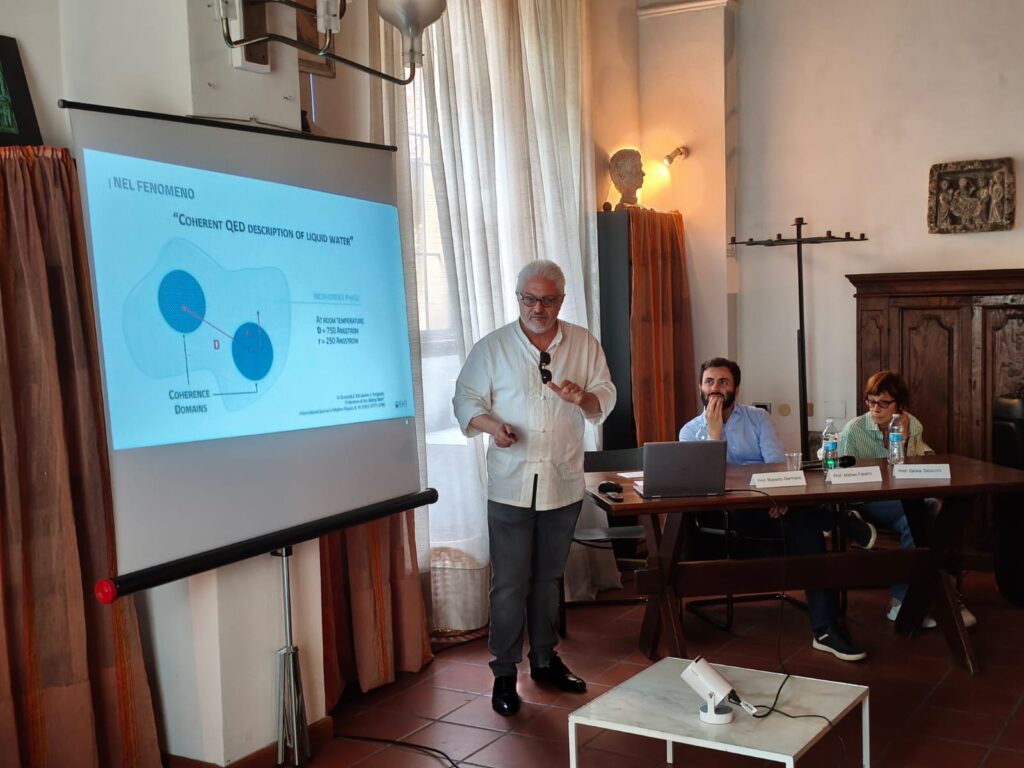
Como: science and business within the same conversation

The final stop in Como experimented with yet another format.

The event “Water: Not Just H₂O”, organised by Davide Franchi and Mattia Tortorelli — two engineers and both OXHY shareholders —, was designed as a broader opportunity to explore the themes of water, research, and energy.

Alongside Roberto Germano, CTO and Co-Founder of OXHY, the speakers included Professor Gloria Tabacchi, Associate Professor of Physical Chemistry at the Department of Science and High Technology of the University of Insubria, and Professor Matteo Fasano, Associate Professor at the Department of Energy of Politecnico di Torino, whose research focuses in particular on heat and mass transfer phenomena, multiscale modelling, and applications at the water-energy nexus.

More than 40 people attended the event.

One of the most interesting aspects of the format was precisely the decision not to build the event exclusively around OXHY, but instead to place the company’s journey within a broader scientific conversation.

This approach brought different areas of expertise and perspectives into dialogue and could provide an interesting basis for similar initiatives in other territories.
A network growing in a distributed way

The three events differed in scale, audience, and format, but they revealed the same dynamic: the ability of the community that has formed around OXHY to independently create new opportunities for meeting and discussion.

The tour also generated new contacts with stakeholders from the worlds of research, industry, and investment, which will be explored further in the coming weeks.

There is also a symbolic connection between these events and OXHY’s technological journey.

The company is working towards an increasingly distributed vision of energy, with the aim of developing technologies that, over time, can be integrated into different devices and systems.

This tour grew in a similarly distributed way: not through a single centrally replicated format, but through initiatives created in different territories, by different people, and for different audiences.

And this is perhaps the most interesting outcome of the three days: seeing a community of shareholders, partners, and stakeholders progressively become a network capable of creating new opportunities for dialogue around OXHY’s activities.

OXHY strengthens its intellectual property strategy

OXHY strengthens its intellectual property strategy

The European Patent Office has issued its positive opinion within the PCT procedure, recognizing novelty and inventive step in the claims examined.

OXHY has taken another step forward in the protection of its technologies.

As part of the international PCT procedure, the European Patent Office has issued the International Preliminary Report on Patentability (IPRP) concerning the application “Improved method and apparatus for extracting electrical energy from water.”

Based on the preliminary examination of the report, all claims included in the application were found to meet the requirements of novelty and inventive step.

Intellectual property and technological development

For OXHY, intellectual property is an integral part of its industrial development journey. Protecting the distinctive elements of its technology means building a stronger foundation for the next stages of engineering, validation, collaboration with industrial partners, and international growth.

The outcome of the IPRP therefore represents a positive result within a broader strategy to protect the proprietary technologies developed around the Oxhydroelectric Effect and Oxhycell.

“For a deeptech startup, technology and intellectual property need to evolve together. This result provides important validation of the work carried out so far and strengthens the foundations on which we are building OXHY’s next stages of industrial development. Protecting innovation will also play an increasingly central role in our dialogue with international partners and stakeholders.”
Francesco Paolo Tuccinardi
CEO and Co-Founder at OXHY

This result marks the beginning of a new phase in OXHY’s international patent journey. The IPRP represents a significant step within the PCT procedure and now paves the way for the subsequent national and regional phases.

The procedure has been handled by Jacobacci & Partners, which supports OXHY in the protection of its intellectual property.

“The outcome of the IPRP represents a positive result within the international procedure, particularly with regard to the novelty and inventive step requirements of the claims examined. The process will now continue with the definition and launch of the subsequent national and regional phases in the territories identified by the company.”
Jacobacci & Partners

From protection to industrial growth

The strengthening of OXHY’s intellectual property strategy is progressing in parallel with the company’s development.

OXHY’s objective is to build, over time, an IP portfolio aligned with the evolution of its technologies, capable of supporting engineering and validation activities while strengthening engagement with industrial partners and international markets. In a deeptech company, value lies not only in developing the technology itself, but also in the ability to protect it and build a strong industrial position around it over time.

The patent process is now moving towards the national and regional phases, while the development and engineering of Oxhycell continue.

Three OXHY events are taking place across Northern Italy

Three OXHY events are taking place across Northern Italy

From the Northeast to the Northwest, passing through three different regions that are linked by an already strong relationship with OXHY

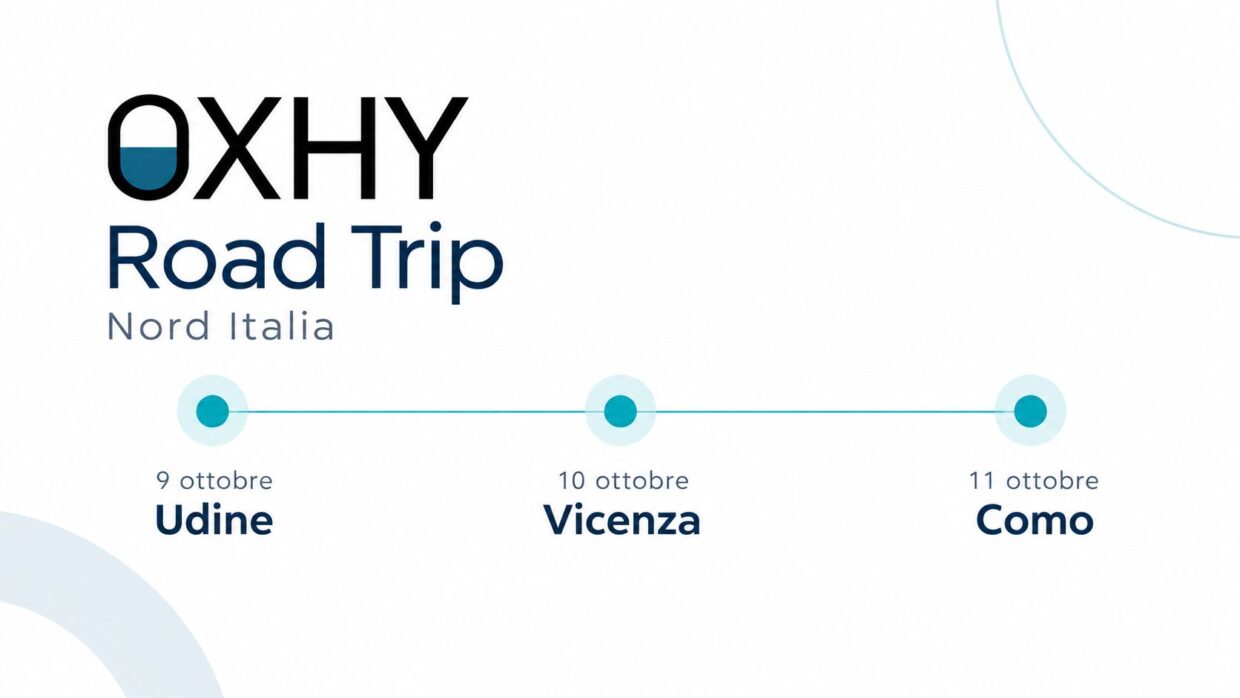
On October 9, a short road trip will set out from Udine, continuing to Vicenza on October 10 and concluding on October 11 in Como. These three events were conceived with different formats and target audiences, but they share one common feature: they are not centrally organized by OXHY, but rather initiatives born out of the interest of partners, friends of the project, and people who have closely followed the company’s growth over the years.

This is perhaps the most interesting aspect of the journey. The three events are “grassroots” initiatives, organized by people who have chosen to create opportunities in their own communities to learn more about OXHY, explore its scientific journey, and discuss the potential industrial applications of the technologies under development.

All three OXHY co-founders: Roberto Germano, Graziano Terenzi, and Francesco Paolo Tuccinardi, will be participating. Roberto Germano, the company’s CTO, will be the keynote speaker at all three events.

A relationship with the North that has evolved over time

The choice of location is no coincidence. Northern Italy has played a significant role in OXHY’s growth, both through the investor base that has supported the project and through the relationships developed with companies, technology partners, and industry stakeholders.

That’s why the October tour won’t just be a series of presentations. Above all, it will be an opportunity to meet in person with some of the communities that have supported OXHY to date and to initiate new conversations with businesses, institutions, professionals, and individuals interested in the research and potential applications of the technology.

Each stop, however, will have its own unique character, developed in collaboration with local organizers.

October 9 – Udine

The first stop will be Udine, where the event stems from the work of the Vivibensipo association.

The local organization has a network that spans the entire Friuli-Venezia Giulia region, through regional offices, partner associations, and channels dedicated to its community. The goal is therefore to reach beyond the city of Udine itself and engage a regional audience interested in learning more about OXHY’s journey.

The event is scheduled for October 9 at 7:00 p.m., with an estimated capacity of about 120 people.

📍  Udine, Pradamano headquarters, Via Marconi 30

🕒 October 9 at 7:00 PM

👉 To attend: Register via the website www.vivibensipo.it. For more information, email [email protected] or call 0432630962 from 9:00 AM to 4:00 PM, Monday through Friday.

October 10 – Vicenza

The second stop will take OXHY to Vicenza, for an event organized by the Salus Live Foundation.

The goal here is particularly interesting: to build a broader audience than the one that traditionally follows the association’s activities, by also involving people from the scientific, industrial, and business communities.

There is already a positive precedent. In 2024, a meeting with Roberto Germano drew more attendees than the venue could accommodate, making a second event necessary. For this new edition, a venue with a capacity of approximately 300 people has been selected. It will not simply be a presentation of a new technology, but an opportunity to look beyond what we currently consider possible in the field of energy. An event designed for those who want to learn, understand, and be surprised by a possible new vision of energy.

📍 Casa Insieme – Via Braghettone 20, Thiene (Vicenza)

🕒 Saturday, October 10, 2026 – 5:00 p.m.

👉 To attend: Info and reservations: Flavio +39 333 238 2403 (Suggested donation: €10)

October 11 – Como

The tour will conclude in Como on October 11 with two OXHY members who are working together to engage local entrepreneurs, institutions, and stakeholders.

In Como, the starting point will be water, used as a key educational tool to guide the audience toward the topics of research, energy, and potential industrial applications. The format is designed to bring together three levels: public outreach, in-depth scientific discussion, and engagement with the local business community.

The event aims to create a space for direct dialogue with companies and institutions, in part to identify where there may be concrete interest in experiments, pilot projects, or new collaborations.

The event is scheduled for 2:30 p.m. at Palazzo del Borgo.

📍 Palazzo del Borgo, Como

🕒 October 11, 2:30 p.m.

👉 Registration: https://eventooxhycomo.carrd.co/

Three Cities, a Growing Network

Udine, Vicenza, and Como will not be three replicas of the same event. The audiences, organizers, context, and likely even the questions that arise will vary.

The common thread will be OXHY and the journey that is progressively moving from research toward engineering, validation, and potential industrial applications. But the value of this journey also lies in how it began: as a spontaneous initiative by people who took the initiative to open up their networks and communities to the project.

For OXHY, this will therefore be an opportunity to share where we’ve gotten to, but above all to listen, meet new partners, and understand what collaborations might emerge along the route from Udine to Como, via Vicenza.

OXHY at the Human Driven AI Summit 2026: energy, physics and new frontiers in artificial intelligence

OXHY at the Human Driven AI Summit 2026

Energy, physics and new frontiers in artificial intelligence

On September 18–19, OXHY will be in Pompeii for the Human Driven AI Summit 2026, an event dedicated to the relationship between artificial intelligence, science, industry and society. OXHY will be represented by Roberto Germano, Co-Founder and CTO, and Graziano Terenzi, Co-Founder and CSO, both taking part in the “Science & Life – Consciousness, Mind and New Physics” session, scheduled for September 18 at the Nexus Center Theatre.

It will be a particularly interesting session also because of the quality of the discussion: alongside Roberto and Graziano, the stage will host Federico Faggin, Giuseppe Vitiello, Paolo Silvestrini and Alioscia Hamma, with RAI journalist Ettore de Lorenzo moderating the session. For OXHY, this is a highly relevant context, as it brings together fundamental physics, cognition, computation and energy — areas that are increasingly overlapping.

From neural computation to energy efficiency

Graziano will focus on the new frontiers of neural computation, exploring models more closely inspired by physics and biological systems and their potential contribution to the development of more energy-efficient AI architectures. His work is part of a research path that questions a purely computational view of cognition and considers the possibility that physical and field dynamics may play a deeper role in the functioning of intelligent systems.

Roberto will instead start from a very concrete issue: the growing energy demand of contemporary computing architectures. His contribution will also touch on still-exploratory approaches related to neural-like systems, protonic systems and collective phenomena in matter studied through quantum physics. A natural reference is the efficiency of biological systems: the human brain operates with a power consumption in the order of only a few tens of watts, while still handling language, context, memory and complex cognitive processes. It is precisely this gap between computational capability and energy consumption that raises new questions about how future systems could be designed.

AI, energy and physical infrastructure

For OXHY, this topic also connects with the work already underway on energy harvesting and waste heat recovery. Artificial intelligence, after all, is not only software: it exists within servers, chips, data centers, cooling systems and edge devices that consume energy and generate heat. Thinking about the future of AI therefore also means considering the physical infrastructure that supports it, the materials involved and the technologies that can help make it more efficient.

It is on this ground that OXHY is pursuing two complementary lines of work: on the one hand, the development of technologies for recovering and converting dispersed energy; on the other, the exploration of computational paradigms more closely connected to physics and natural systems. These are still distinct areas and at different levels of maturity, but they share the same direction of research: reducing the energy cost of computing power and better understanding the relationship between energy, matter and information.

A dialogue across different disciplines

The September 19 session will therefore be an opportunity to bring together very different perspectives around one underlying question: what kind of physics, energy systems and computational models will be needed to support the next evolution of artificial intelligence?

Human Driven AI Summit 2026
📍 Pompeii – Nexus Center
📅 September 18–19, 2026
Science & Life – Consciousness, Mind and New Physics
September 19, 11:30–12:40

OXHY closed its CrowdFundMe campaign: a record €1.7 million raised thanks to more than 500 new investors

OXHY closed its CrowdFundMe campaign: a record €1.7 million raised thanks to more than 500 new investors

The funds raised exceed the initial minimum target by more than eight times and inject new energy into the Neapolitan deep-tech company’s research, engineering, and industrial validation efforts.

OXHY has concluded its equity crowdfunding campaign on CrowdFundMe, raising a record amount of over 1.7 million euros, with contributions from more than 500 new investors. The initial minimum target was 200,000 euros. The final result therefore exceeds the initial target by more than eight times, confirming the strong interest in OXHY and its technological trajectory.

The funds raised represent an important milestone in the company’s journey: a tool to strengthen development activities, expand the investor base, and support the work needed to bring the technology to more advanced levels of maturity.

A fundraising effort that strengthens the roadmap

OXHY is developing Oxhycell, a proprietary technology designed to explore the conversion of ambient heat and infrared radiation into electrical energy.

The funds raised will be allocated to the research and development plan, cell engineering, measurement and validation activities, intellectual property protection, and the preparation of the first pilot projects with industrial partners.

The initiative focuses in particular on low-power applications, such as sensors, IoT devices, microelectronics, and industrial monitoring systems, where self-powered operation can reduce dependence on batteries, wiring, and maintenance.

At the same time, OXHY will continue to work on activities related to energy recovery in industrial settings, including ORC technologies and potential integrations with the Oxhycell platform.

“The fundraising result is in line with expectations that have developed over time and allows us to implement the minimum roadmap as planned. The most interesting aspect, however, is the quality of the participation: a community is forming around OXHY that recognizes the scientific and industrial value of the project and the contribution this technology can make toward a different way of generating energy.”
Graziano Terenzi
Co-founder & CSO at OXHY

In addition to its industrial and financial aspects, the collection also highlights the scientific vision underlying the OXHY project: reducing heat dissipation, converting currently unused energy, and bringing decentralized electricity generation into everyday objects and applications.

“It is a scientific, technological, and industrial mission; but above all, it is a shared worldview. Every true change begins with those who decide to believe in it by taking that first small step.”
Roberto Germano
Co-founder & CTO at OXHY

A community of investors

The fundraising campaign on the crowdfunding platform involved more than 500 investors, including professionals, entrepreneurs, researchers, technicians, and individuals interested in closely following the development of an Italian deep-tech innovation.

For OXHY, this figure is particularly significant because it demonstrates how equity crowdfunding can mobilize private capital even for complex scientific projects, which typically have longer development timelines than digital or software models.

The fundraising effort takes place in a context where access to capital for innovative companies remains heavily concentrated in Italy’s major financial hubs. Against this backdrop, OXHY’s achievement highlights the potential to build investment pathways starting from Southern Italy, leveraging scientific expertise, intellectual property, and industrial prospects.

A journey that has been in the making for some time

The CrowdFundMe campaign came after more than two years of activity, during which OXHY worked on building the company, defining the fundraising strategy, preparing technical and financial documentation, establishing the special purpose vehicle, and engaging with potential investors.

“It was a complex fundraising effort, prepared with great care. The work leading up to the launch was particularly intense: documentation, corporate structure, relations with the platform, and discussions with investors who had been waiting a long time for the campaign to go live. Once launched, the campaign raised the project’s profile and strengthened the entire fundraising process.”
Pierluigi Tuccinardi
Head of Investor and Legal Affairs at OXHY

The round continues through 2027

The closing of the fundraising round marks a significant milestone in a broader process.

With the equity crowdfunding phase now complete, OXHY is continuing its fundraising efforts as part of its ongoing capital increase. The company intends to complete the investment round by June 2027, in line with the requirements of its technological and industrial roadmap.

In the coming months, the company will continue to share updates on laboratory activities, test progress, prototypes, industrial partnerships, and progress toward application validation.

About OXHY

Founded in Naples in 2023, OXHY is a deep-tech company focused on developing technologies for distributed energy autonomy. Through the Oxhycell platform, the company works on converting ambient heat and infrared radiation into electrical energy, with a particular focus on sensors, IoT devices, microelectronics, and ultra-low-power systems.

OXHY is part of the Campania Newsteel ecosystem, an incubator promoted by Città della Scienza and the University of Naples Federico II, and brings together scientific, engineering, and industrial expertise to take the technology from research to application validation.

Oxhy and Tresol explore ORC integration for solar thermal electricity generation

Oxhy and Tresol explore ORC integration for solar thermal electricity generation

The Memorandum of Understanding establishes a preliminary, non-commercial framework to evaluate the integration of TVP Solar thermal technology with a compact ORC prototype for electricity generation

Oxhy has signed a Memorandum of Understanding with Tresol S.r.l. to launch a preliminary research and testing programme focused on the integration of Oxhy’s Organic Rankine Cycle (ORC) technology with a solar thermal field based on TVP Solar MT Power technology.

The objective is to assess whether thermal energy generated by the TVP Solar system can be transferred to an Oxhy ORC prototype and converted into usable electrical energy, through dedicated plant interfaces and a heat exchanger. The MoU does not establish a commercial offering for customers. It provides a structured framework for feasibility analysis, pre-engineering, testing, data collection and the possible definition of a future proof of concept. The agreement supports Oxhy’s ongoing work on ORC technology and its validation in real operating environments.

A renewable thermal source for electricity-generation testing

At Tresol’s facility in Avellino, a solar thermal field based on TVP Solar MT Power v4 panels consists of approximately 175 collectors arranged in 25 strings of 7 panels. In the absence of a dedicated thermal user, part of the energy generated by the solar field is currently dissipated through a dry cooler. This excess heat represents a potentially recoverable resource. Through this research and testing programme, Oxhy and Tresol will assess whether part of this thermal energy can be supplied to a compact ORC prototype and converted into electricity.

The activities will generate technical and operational data that may support subsequent steps, including a proof of concept, an on-site pilot or a further co-development agreement. Any future commercial development would require separate evaluation and dedicated contractual arrangements.

Planned research and testing activities

The MoU defines a preliminary collaboration framework covering:

  • analysis of the thermal integration between the solar field and the ORC prototype;
  • definition of operating ranges for temperature, flow rate, pressure and available thermal power;
  • identification of the required heat exchanger, plant interfaces and measurement points;
  • development of a test plan with KPIs, success criteria and safety procedures;
  • monitoring and analysis of thermal and electrical performance data;
  • preliminary techno-economic assessment of the solution’s replicability.

The parties will establish a joint working group to define the technical scope, site constraints, test requirements and possible next steps.

A step in Oxhy’s ORC development programme

The collaboration with Tresol fits into Oxhy’s broader ORC development programme, in continuity with Origin – Organic Rankine Innovative Generator for Industrial Needs, recently selected under the STEP Lazio grant.

Oxhy is developing compact and modular ORC systems designed to recover energy from low- and medium-temperature thermal sources and convert it into electricity. The current phase is focused on research, engineering and validation. The aim is to progress toward pre-industrial systems that can be tested under real operating conditions before any future commercial deployment is considered.

“This agreement comes at a stage in which Oxhy is strengthening its ability to move ORC technology from laboratory development to structured testing in real operating environments. Working with qualified industrial partners allows us to collect data, validate technical assumptions and prepare the next engineering steps.”
Graziano Terenzi
Co-founder and Chief Strategy Officer of Oxhy

A partnership focused on technical validation

For Oxhy, the MoU with Tresol represents the type of industrial collaboration needed to assess technologies under realistic conditions. The programme is focused on technical validation, data collection, definition of operating requirements, assessment of electricity-generation performance and identification of possible future development pathways. The immediate goal is not to introduce a commercial solution, but to understand rigorously how a compact ORC prototype can integrate with TVP Solar thermal technology and convert otherwise unused heat into electrical energy.

“We are pleased to start this collaboration with OXHY. This testing activity will allow us to assess, under real operating conditions, the operating windows and the potential complementarity between high-efficiency solar thermal fields and compact ORC systems, providing useful insights for the further development and integration of both technologies”
Francesco Vitobello
COO and VP Industrial Engineering at TVP Solar

Toward future on-site validation

The signing of the Memorandum of Understanding marks the beginning of an exploratory research and testing phase. The next steps will include technical data exchange, site assessment, definition of the thermal interface and preparation of a possible test plan.

Oxhy will continue to develop partnerships aimed at validating its ORC technology in real-world environments, with the objective of progressing from applied research to engineering and, subject to successful testing and further agreements, toward future pilot and industrial applications.

Oxhy inaugurates its new operational unit in Lazio

Oxhy inaugurates its new operational unit in Lazio

The new site in Lazio strengthens Oxhy’s industrialization pathway, with a focus on advanced prototyping, engineering and the development of ORC technologies

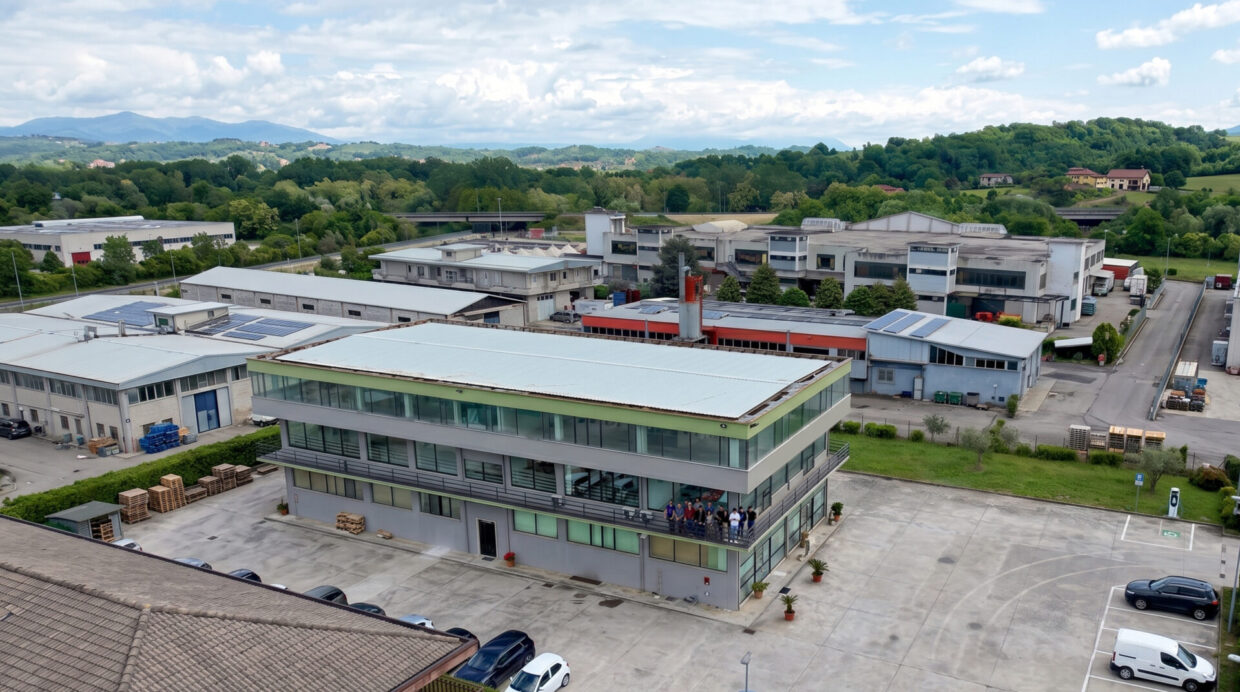
Oxhy inaugurates its new operational unit in Ceccano, in the province of Frosinone, marking an important step in the company’s industrial growth.

The new site was created to strengthen activities in advanced prototyping, engineering and industrialization, with particular focus on the development of ORC – Organic Rankine Cycle technologies for recovering energy from low- and medium-temperature waste heat.

The Ceccano site comes at a strategic stage for Oxhy, as experimental research is progressively evolving toward a pre-industrial trajectory, focused on the development of systems, components and prototype platforms increasingly closer to real-world application contexts.

A milestone in the industrialization pathway

The new operational unit represents a key milestone for Oxhy because it enables activities that require dedicated spaces, infrastructure and technical capabilities that are difficult to accommodate within research and laboratory environments alone.

In Ceccano, Oxhy will progressively concentrate activities related to:

  • advanced prototyping;
  • testing and development of new cells;
  • engineering of ORC systems;
  • setup of dedicated machinery and instrumentation;
  • preparation of a future prototype line with quality assurance and quality control processes.

The goal is to build an operational base capable of supporting Oxhy’s next stages of technological development, validation and industrialization.

“The new Ceccano site represents a key milestone in the engineering and industrialization process of our technology. It is a space designed to carry out manufacturing operations, advanced prototyping and activities related to the development of ORC technologies, at a stage in which Oxhy is consolidating its transition from research toward product development.”
Graziano Terenzi, Co-founder and Chief Strategy Officer of Oxhy

Why Ceccano

The choice of Ceccano also responds to a territorial and industrial rationale.

The Valle Latina represents a strategic axis between Rome and Naples, with a strong manufacturing presence, expertise in mechanical and engineering fields, logistics infrastructure and a growing industrial ecosystem.

Its proximity to Rome, Frosinone, Latina, Cassino and Naples allows Oxhy to position itself in an area with relevant expertise for precision mechanics, prototyping, machine building, engineering and collaboration with universities and industrial players.

The new site also strengthens Oxhy’s presence in Lazio, including in relation to regional development programs and projects already launched by the company.

The connection with the Origin project

The Ceccano operational unit will also be connected to the development of the Origin – Organic Rankine Innovative Generator for Industrial Needs project, recently selected under the STEP Lazio grant.

Origin is an experimental development program dedicated to the engineering and validation of a compact and modular ORC system for recovering energy from dispersed industrial heat.

In this context, Ceccano will be one of the operational assets supporting the development of prototypes, test systems and technological integration activities.

A work-in-progress site, oriented toward the future

The inauguration marks the start of an operational pathway that will continue over the coming months with the progressive setup of the site, the integration of machinery and the development of experimental and prototyping activities.

Future objectives include the development of an initial prototype line for the integrated ORC system, with quality control processes and technical validation.

“In Ceccano, we are launching research, development, testing and prototype production activities. The goal is to build an important site for the development of our technologies, with machinery and tools dedicated to the realization and validation of our devices.”
Stefano Staccone, Engineer Director at Oxhy

From research to industrial capability

The new site confirms Oxhy’s direction: not only research and development, but the progressive construction of engineering and industrial capabilities.

Ceccano represents a concrete step toward an Oxhy increasingly focused on product development, validation in real-world contexts and the creation of technologies capable of entering the market.

It is a new milestone in the company’s roadmap: from applied research to prototyping, from prototyping to engineering, from dispersed energy to new solutions for distributed energy autonomy.

Oxhy presents OXHYcube

Oxhy presents OXHYcube, the modular demonstrator based on Oxhycell

An experimental platform to explore new ultra-low-power energy harvesting applications and distributed energy autonomy.

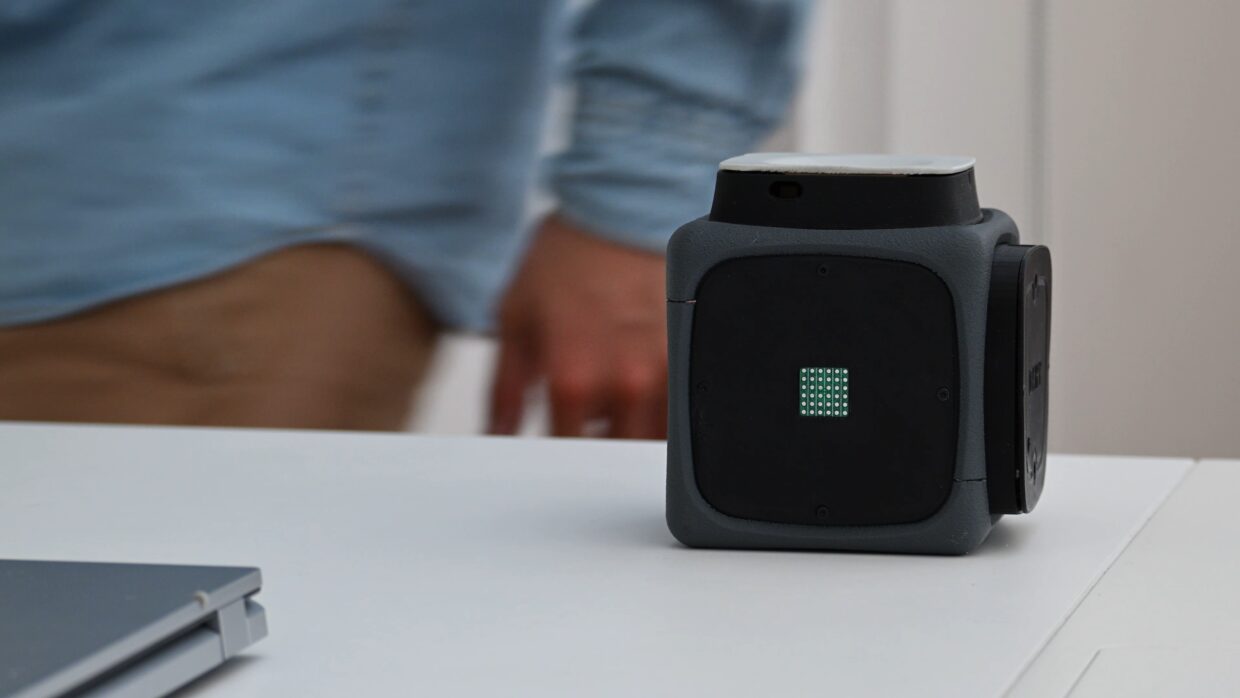
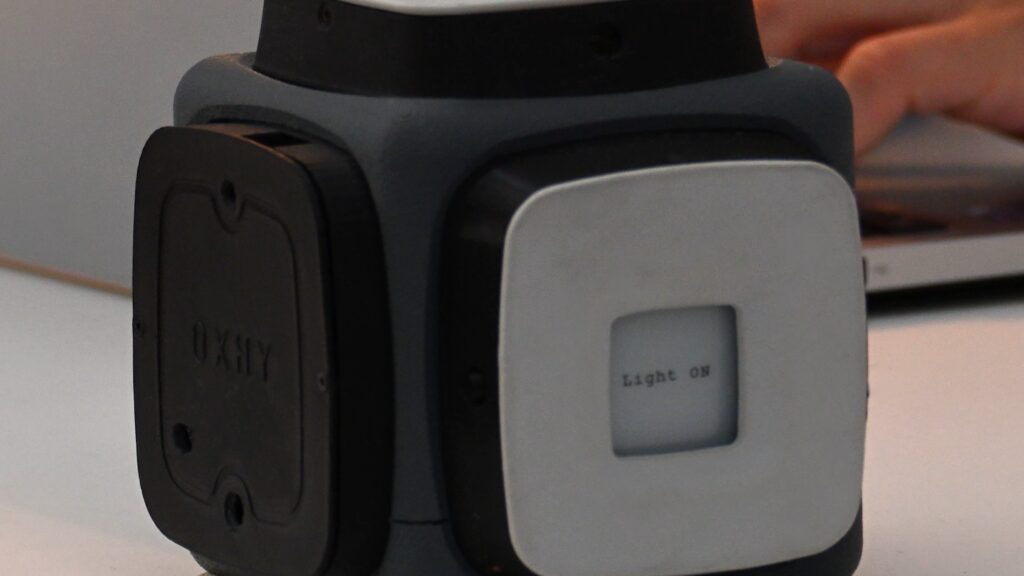
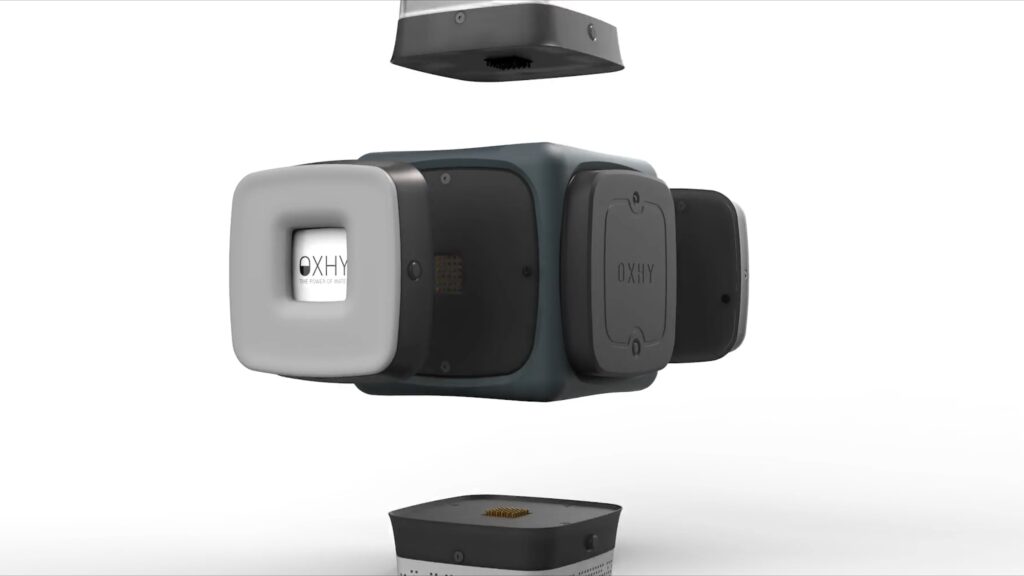
Oxhy presents OXHYcube, a modular demonstrator designed to make the application potential of Oxhycell visible and understandable: the technology developed by Oxhy to generate electricity from ambient infrared radiation and dispersed heat.

OXHYcube was created with a clear goal: to show how small amounts of energy can power simple, adaptive and scalable electronic functions, opening new perspectives for ultra-low-power devices, distributed sensing, industrial IoT and low-consumption autonomous systems.

From the laboratory to a physical, modular and interactive object

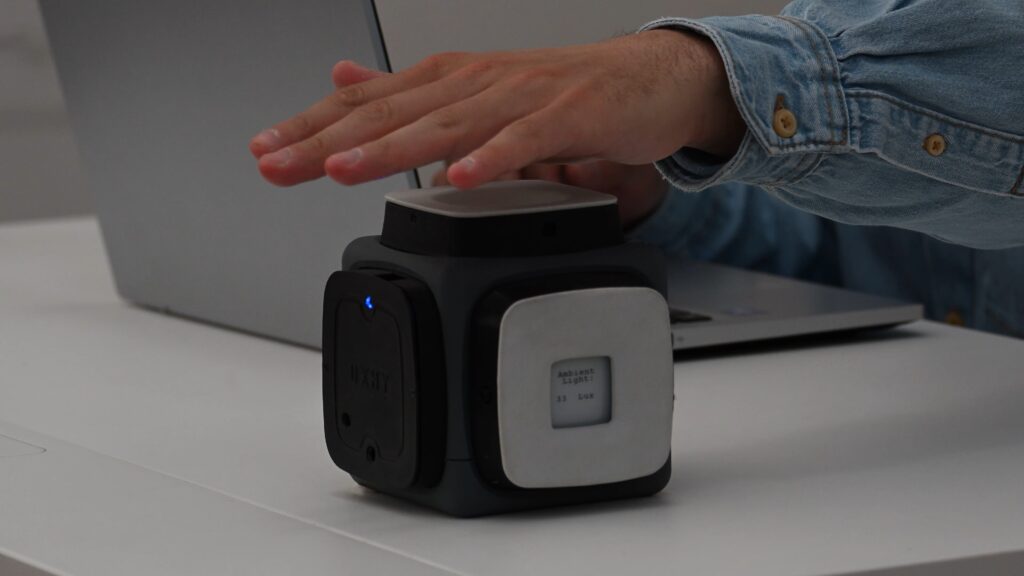
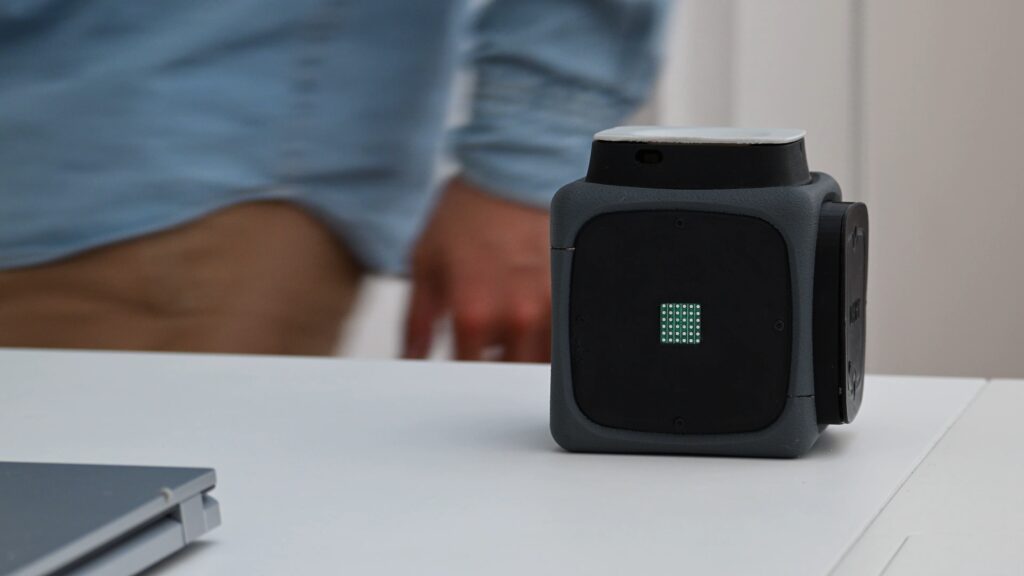
At the center of the system is the Powercore, the energy core based on an array of Oxhycell units. Around the Powercore, different functional modules can be magnetically attached, including LED light, e-paper display, proximity and ambient light sensors, and audio outputs.

Interaction with OXHYcube takes place wirelessly via Bluetooth Low Energy (BLE), positioning the demonstrator within the field of ultra-low-power IoT architectures.

“With OXHYcube, we want to show what Oxhycell can become when it moves from the laboratory to a physical, modular and interactive object,” says Graziano Terenzi, Chief Strategy Officer and Co-founder of OXHY. “It is not a final commercial product, but an important step toward exploring future applications in autonomous electronics, sensing and distributed low-power systems.”

Detect, activate, adapt

The demonstrator principle behind OXHYcube can be summarized in three steps:

Detect → Activate → Adapt

The system is designed to show an essential interaction between energy, environment and electronic function: detecting an input, activating a module and adapting its behavior according to the context.

This logic is relevant for future applications in which sensors, distributed devices and ultra-low-power systems will need to operate with reduced consumption, greater autonomy and less dependence on battery replacement.

Why OXHYcube matters

OXHYcube translates a complex technology into a concrete experience.

It shows how Oxhycell can evolve from an experimental cell into an application platform, paving the way for future prototypes in:

  • distributed sensing;
  • industrial IoT;
  • smart infrastructure;
  • autonomous devices;
  • ultra-low-power electronic systems.

Modularity is one of the key elements of the demonstrator: multiple modules, Powercores or cubes can be combined to explore configurations with increasing power and more complex application scenarios.

OXHYcube does not only show a technology. It shows a possible direction for autonomous electronics.

A bridge between research, engineering and future applications

OXHYcube represents an intermediate step in the development roadmap of Oxhycell: not the final destination, but a tool to make Oxhy’s technological trajectory more tangible.

The launch of the demonstrator comes at a particularly significant stage for the company, during its equity crowdfunding campaign currently live on CrowdFundMe, which has already raised over €1.3 million.

To support the launch of OXHYcube, Oxhy has produced a teaser video, visual materials and an interactive 3D web experience, designed to present the demonstrator in an accessible and engaging way.

Small Energy. Massive Autonomy.

👉 Watch the teaser video: https://youtu.be/zdamntGqh6Q?si=qPaSm8mNNrWmuoDs
👉 Explore the landing page on OXHYcube: https://www.oxhy.it/showcase/oxhycube-en.html
👉 Discover the equity crowdfunding campaign: https://www.crowdfundme.it/projects/oxhy/

Oxhy’s “Origin” project wins the STEP Lazio grant competition

Oxhy’s “Origin” project wins the STEP Lazio grant competition

A new experimental development program to deploy a compact 10 kW ORC system for recovering energy from waste heat

Oxhy is pleased to announce that it has been awarded the STEP Lazio grant for the project “Origin – Organic Rankine Innovative Generator for Industrial Needs”, ranking 11th out of 22 selected projects.

The public ranking is available here: https://fesr.regione.lazio.it/app/uploads/2026/04/Copia-15493-1.pdf

The project is an experimental development program with a total value of approximately €613,000 and represents a strategic step in Oxhy’s industrial growth trajectory.

Origin focuses on the development, engineering, and validation in a real-world operating environment of an innovative ORC – Organic Rankine Cycle system for recovering energy from low- and medium-temperature waste heat.

With this project, Oxhy aims to contribute to one of the key challenges of the industrial energy transition: transforming heat flows that are currently lost into usable electrical energy, thereby reducing waste, emissions, and operating costs.

The problem: a large amount of industrial energy is still being wasted

In many industrial processes, a significant portion of the energy used is dissipated as waste heat. This occurs, for example, in furnaces, cooling cycles, pasteurization processes, heat treatments, incineration plants, anaerobic digesters, and many other manufacturing and energy applications.

A significant portion of this heat falls within a low-to-medium temperature range, which is not efficiently utilized by solutions currently available on the market. Traditional ORC systems, in fact, are frequently designed for larger-scale plants, featuring centralized configurations, high costs, and operational requirements that limit their application in distributed settings or at small and medium-sized industrial facilities.

The result is that a great deal of potentially recoverable energy continues to be lost to the environment.

The solution: a compact, modular, and decentralized ORC

The “Origin” project was launched to address this limitation through the development of an advanced, compact, and modular ORC system, designed to operate within a temperature range of approximately 60°C to 350°C.

The goal is to create a solution capable of capturing heat flows directly at the source, enabling distributed power generation that can be installed at industrial facilities, energy infrastructure sites, treatment systems, and production settings where waste heat is available.

The system will be designed for a target power output of 10 kW, with an architecture intended to be scalable and adaptable to various industrial applications.

Technical objectives of the project

The program is expected to last 24 months and aims to advance the technology from its current TRL 5 to TRL 7, that is, to demonstrate the system in a real-world operating environment.

The project’s main objectives include:

  • engineering development of the complete ORC system;
  • construction of one or more 10 kW pre-industrial prototypes;
  • validation on a test bench and in a real operating environment;
  • achieving a conversion efficiency of 15%;
  • demonstration of operational continuity exceeding 200 hours without failure;
  • collection of technical and performance data for the subsequent industrialization phase;
  • definition of technical and production specifications for future commercial developments.

The completion of TRL 7 will constitute a key milestone for the transition to the subsequent phases of industrialization, production, and market introduction.

The industrial sectors involved

“Origin” is designed for a wide range of sectors where the recovery of waste heat can generate economic, energy, and environmental value.


Key application areas include:

  • the steel industry;
  • the glass industry;
  • the cement industry;
  • the chemical and petrochemical industries;
  • the food industry;
  • the paper industry;
  • the textile industry;
  • the automotive and heat treatment sectors;
  • waste treatment and wastewater treatment plants;
  • decentralized energy production facilities.


In all these sectors, the ability to recover energy from currently underutilized heat streams can help improve overall process efficiency, reduce net energy demand, and support companies’ sustainability goals.

An important step in Oxhy’s growth journey

Winning the STEP Lazio tender confirms the validity of Oxhy’s technological and industrial vision: to develop innovative solutions for capturing, converting, and utilizing energy that is currently lost.

With “Origin,” Oxhy strengthens the ORC component of its technology portfolio and takes a concrete step toward creating more compact, efficient, distributed, and sustainable energy systems.

Origin is the starting point for a new generation of industrial energy recovery systems. For Oxhy, this marks a fundamental milestone in the company’s journey: from applied research to industrial validation, from proprietary technology to the market, and from wasted energy to a new resource for industry.

Oxhy Completes the Smart&Start Program

Oxhy completes the Smart&Start program

With Invitalia’s site visit on May 5, 2026, Oxhy has entered the final phase of the Smart&Start Italia program, completing a strategic process of technological development and the establishment of its advanced prototyping laboratory.

On May 5, 2026, Invitalia, the program’s managing entity, conducted an on-site inspection to verify the expenditure plan for the Oxhy program — Application SSI0004946, CUP C26I24006890008.

This is one of the final steps required for the approval of the project’s final balance. Oxhy has, in fact, completed and reported on the final phase of a program that concluded ahead of the initially planned 24-month timeline, with a contractually approved expenditure plan of approximately €524,000 and a total contribution—comprising both subsidized financing and a grant—of approximately €420,000.

A key initiative to strengthen Oxhy’s technology platform

The Smart&Start project marked a decisive step toward consolidating the technical, experimental, and instrumental foundation necessary for the development of the Oxhycell.

Thanks to the program, Oxhy was able to implement a technological platform consisting of internally developed equipment and prototype systems, with the aim of facilitating the transition from a research and development phase to a pre-industrial phase and, subsequently, to commercialization.

The investments strengthened three areas in particular:

  • material characterization;
  • design of prototype systems;
  • development of proprietary instrumentation for testing, manufacturing, and mechanical processing.

New capabilities for testing and characterizing materials

A significant portion of the program was dedicated to research and experimentation on the materials used in the cell.

These activities benefited from the acquisition of laboratory instruments for testing and characterization, including:

  • FT-IR spectroscopy;
  • integrated optical systems with a monochromator;
  • metrological lamps covering various wavelength ranges;
  • mid-infrared LEDs;
  • thermopiles and photodiodes for optical experiments.

This equipment allows for the analysis of the behavior of different materials, including hydrogel matrices, and for a deeper understanding of the physical mechanisms relevant to the evolution of Oxhycell technology.

A prototype nanoindentation machine

When the solutions available on the market did not meet Oxhy’s experimental needs, the team decided to develop new instrumentation in-house.

Among the most significant achievements is the design and construction of a prototype nanoindentation machine, intended for measuring the elasticity of extremely soft and viscoelastic materials.

The system was designed to perform controlled measurements without inducing unwanted lateral deformations in the samples, a particularly important consideration when working with gels and soft materials.

The machine integrates dedicated electronic and mechanical components, including:

  • control electronics;
  • motion drivers;
  • measurement chain with load cell;
  • signal amplification;
  • precision mechanics.

The system is already prepared for future upgrades, including the integration of ultra-high-sensitivity load cells and the implementation of proprietary software routines for automatic multi-point mapping of samples.

A multi-material prototyping platform for the fabrication of experimental devices

A second strategic outcome involves the design of a multi-material prototype 3D printer, intended to support the future production of functional components and subsystems for Oxhycell.

The machine consists of four multi-material print heads with independent axes and is designed as a modular four-tool system, featuring:

  • high-dynamic XY kinematics;
  • a multi-constraint Z-axis;
  • automatic tool changer;
  • capability to process thermoplastics, conductive materials, functional pastes, and hydrogels.

This platform is not only intended for geometric prototyping but also for the experimental fabrication of multi-material devices, paving the way for integrated processes of printing and assembling the various cell components.

The management of the four tools is handled by an automatic tool-changing system inspired by the logic of CNC machine tools. Inactive tools are housed in a dedicated parking system, while coupling with the moving carriage is achieved via a self-centering plate with high repeatability.

This architecture reduces process downtime, limits moving mass, minimizes the risk of collisions, and reduces cross-contamination between different materials.

CNC Machines for Advanced Mechanical Prototyping

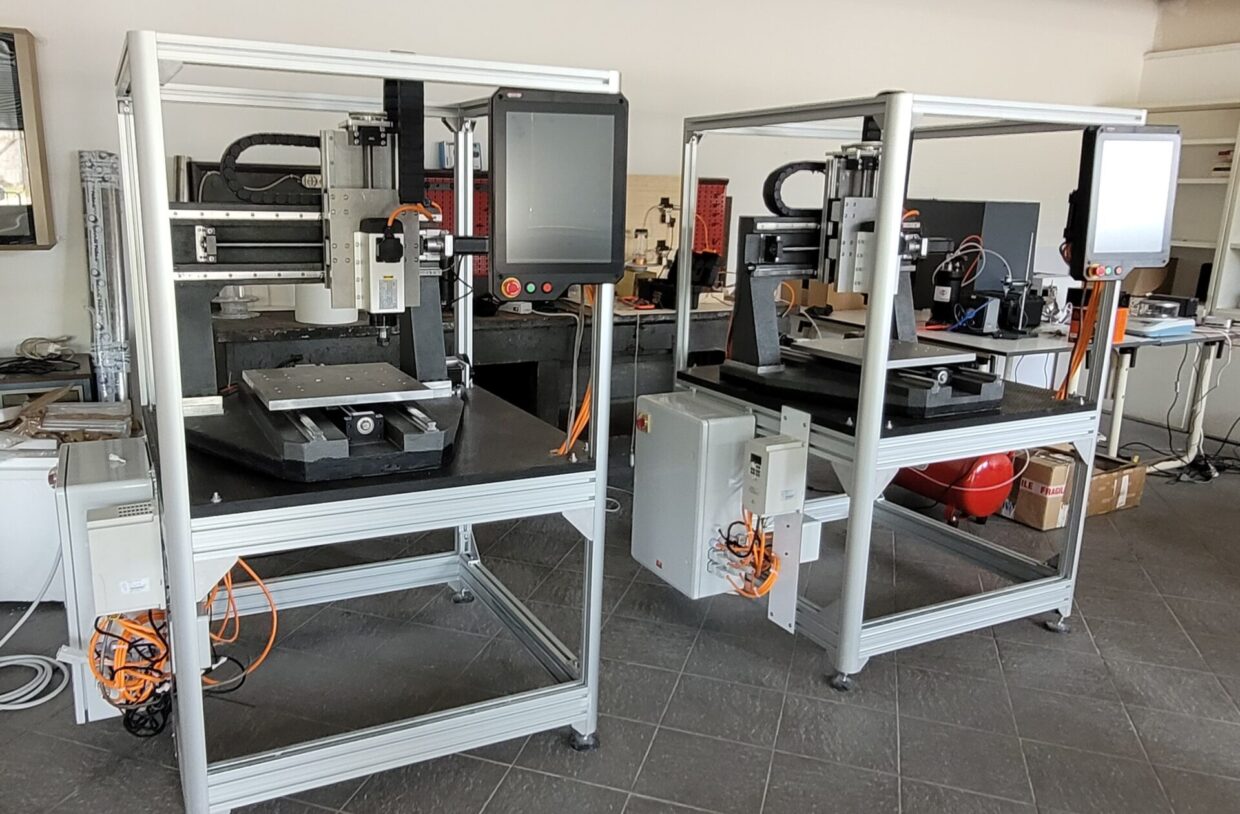
Another outcome of the Smart&Start program was the design and construction of two 4-axis CNC machines, designed to operate in prototyping environments. The goal was to equip the Oxhy laboratory with highly customized machining systems capable of working with tolerances in the hundredths of a millimeter on materials such as aluminum, engineering plastics, and brass.

The decision to develop the machines in-house stemmed from the need to directly control critical parameters such as structural rigidity, vibration damping, compactness, safety, and compatibility with a laboratory environment.

The machines offer a working volume of approximately 400 × 400 × 150 mm, with an overall footprint of about 1000 × 1000 mm and a total height, including the base, of approximately 1.7 meters. The kinematic configuration includes three Cartesian linear axes—X, Y, and Z—and a fourth rotary axis A, which allows for machining on cylindrical or oriented surfaces.

This infrastructure significantly expands Oxhy’s capacity to produce mechanical components, mounts, experimental parts, and subsystems necessary for the development of energy recovery devices.

From research to the pre-industrial phase

For Oxhy, the completion of the Smart&Start program represents much more than just an administrative milestone. It is a step that consolidates the company’s ability to design, test, characterize, and build in-house tools and functional prototypes for the development of Oxhycell.

The technology platform built through the program now serves as a solid foundation for tackling the next phase: the transition from structured experimental research to a pre-industrial engineering trajectory.

This path is essential for transforming the oxyhydroelectric cell from a cutting-edge technology into an application platform, with potential uses in distributed systems, sensors, industrial IoT, and low-power devices.

A foundational infrastructure for Oxhycell’s future

With the completion of the activities outlined in the Smart&Start program, Oxhy now possesses a range of expertise, tools, and prototyping systems that strengthen its experimental autonomy and accelerate its progress toward the next technological milestones.

The ability to integrate commercial instrumentation, in-house development, mechatronic prototyping, and multi-material manufacturing is a central element of Oxhy’s strategy. It is on this basis that the company intends to continue its development path, leading Oxhycell toward increasing levels of technological and application maturity.